Tell us about the job
Takes about a minute. No obligation.
A contractor coming out to look at a water heater in Wake County has to make a specific determination before they can quote a repair: whether the failure traces to cumulative environmental stress or to the ordinary aging of components that run every day regardless of what the sky does. 458 severe weather events were recorded in Wake County, North Carolina between 2015 and 2024. At that rate, severe weather is a standing condition for equipment here, not a rare event, and it shows up in inspections as corroded connections, stressed pressure relief valves, and sediment patterns that develop faster than they would somewhere the system is asked to do less. Age and maintenance history still explain most failures, but a contractor in this county prices the repair after checking for storm-related wear, not before.
A house built around the turn of this century was designed for equipment generations that are still familiar to any working contractor. Half the homes in Wake County, North Carolina were built in 2000 or earlier (2020-2024 ACS 5-year). That means when a water heater opens and a technician is tracing a fault, the constraint is what the unit contains and whether replacement parts for it are still in production, not something buried in the walls. A heat exchanger that has given out, a control board that has drifted, a valve that no longer seats correctly: those are what decide the scope and the bill.
The Parts of a Water Heater a Contractor Checks During Repair
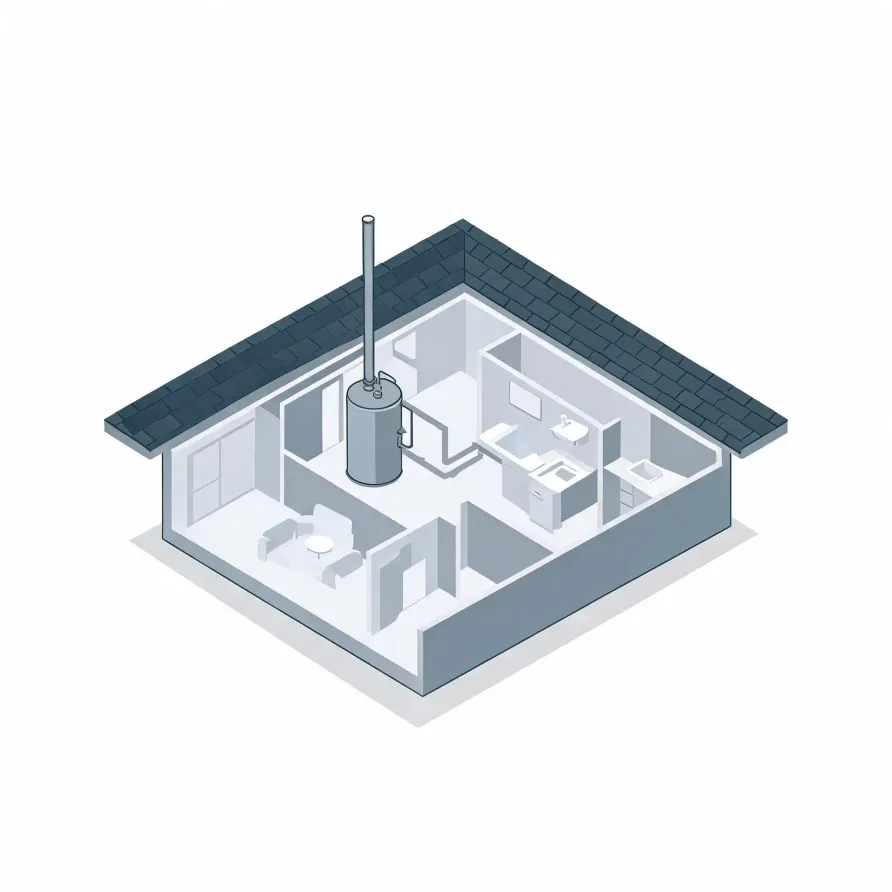
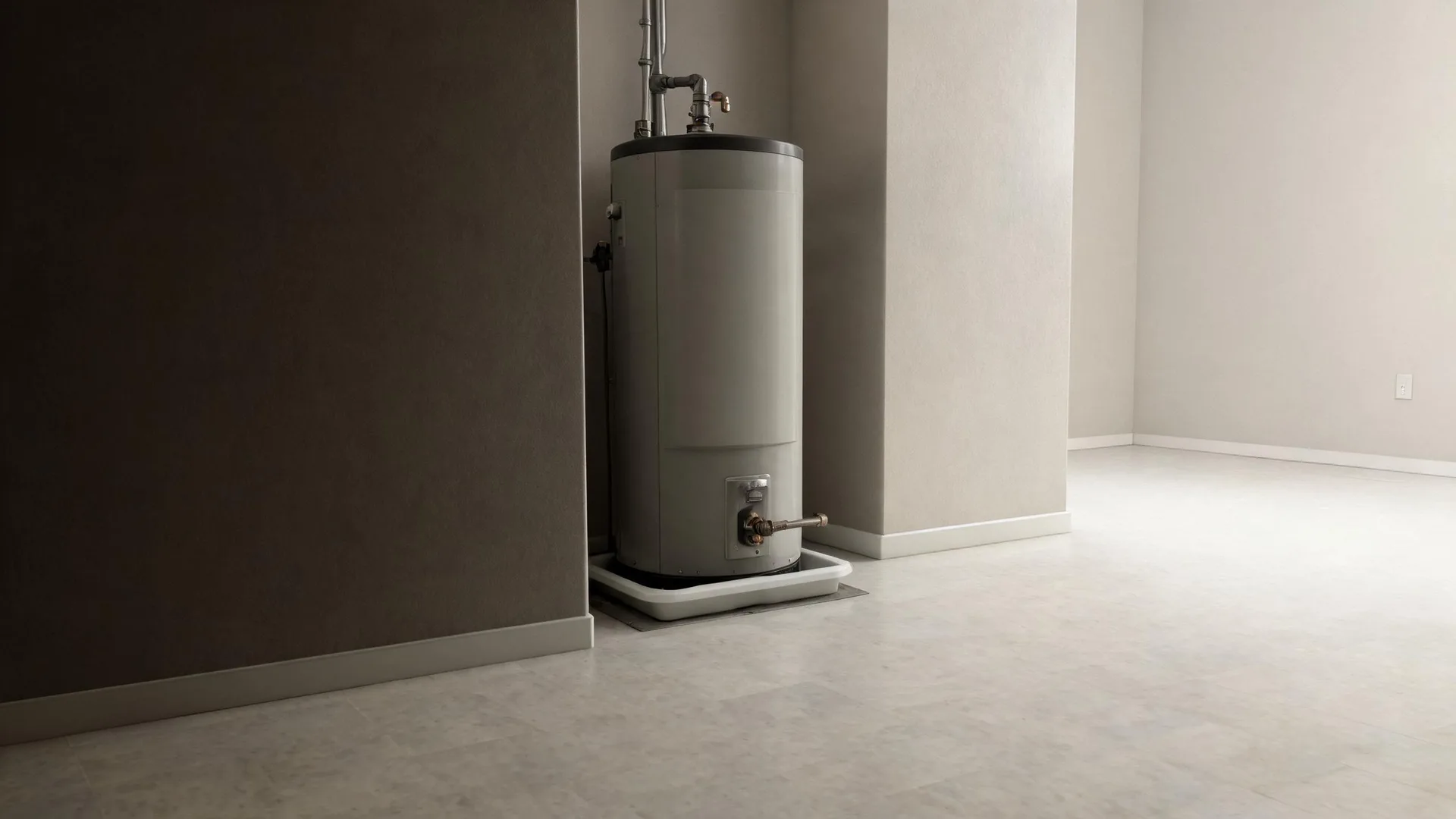
The tank is the piece most homeowners know: a large insulated cylinder that sits in a utility closet, basement, or garage and holds the hot water supply for the house. Inside it, a heating element or burner assembly does the actual heating, and when either of those fails, water comes out cold or barely warm.
The thermostat controls what temperature the tank holds, and a faulty one can produce water that is scalding or never gets hot at all. The pressure relief valve sits on the side of the tank as a safety device, and the anode rod runs down into the water to slow corrosion from the inside out. Both are common points of failure a contractor examines early.
The drawing shows the general layout of a water heater system, and a licensed contractor determines what applies to the specific unit and installation in your home.
Find a contractor in Wake CountyWake County, by the numbers
458 severe weather events were recorded in Wake County, North Carolina between 2015 and 2024.
NOAA National Centers for Environmental Information, Storm Events Database, bulk CSV export, events 2015-01-01 through 2024-12-31.Half the homes in Wake County, North Carolina were built in 2000 or earlier (2020-2024 ACS 5-year).
U.S. Census Bureau, 2020-2024 American Community Survey 5-Year EstimatesWake County, North Carolina holds 496,047 housing units (2020-2024 ACS 5-year).
U.S. Census Bureau, 2020-2024 American Community Survey 5-Year EstimatesOwners occupy 64.1% of the occupied homes in Wake County, North Carolina (2020-2024 ACS 5-year).
U.S. Census Bureau, 2020-2024 American Community Survey 5-Year EstimatesSevere Weather Events in Wake County
Extreme weather puts water heaters under strain, forcing recovery cycles that wear components faster than ordinary daily use. How hard that pressure falls on equipment in Wake County is a local question, and the record below shows what the weather here has historically asked of it.
458 severe weather events, 2015–2024. Source: NOAA National Centers for Environmental Information, Storm Events Database.