Tell us about the job
Takes about a minute. No obligation.
A water heater repair in Halifax County starts with a question a contractor has to answer before pricing anything: how much of what failed is weather-driven wear, and how much is the unit simply running out of years. 107 severe weather events were recorded in Halifax County, North Carolina between 2015 and 2024. At that rate, severe weather is a standing condition here, and components that absorb surge and thermal stress, relief valves, anode rods, and heat exchangers, are the first things a contractor checks. What they find in those parts sets the scope of the repair.
Half the homes in Halifax County, North Carolina were built in 1979 or earlier (2020-2024 ACS 5-year). A water heater sitting in a house that old has almost certainly been replaced at least once, and the replacement was not always matched to what the plumbing and electrical around it were set up to handle. When a contractor opens the unit, what they find in the tank, at the anode rod, and along the supply connections reflects that history of patchwork rather than a clean original install. Sediment load, corrosion on fittings, and parts that were close enough but not right are common findings, and each one shifts what the repair actually costs.
The Parts of a Water Heater a Contractor Checks First
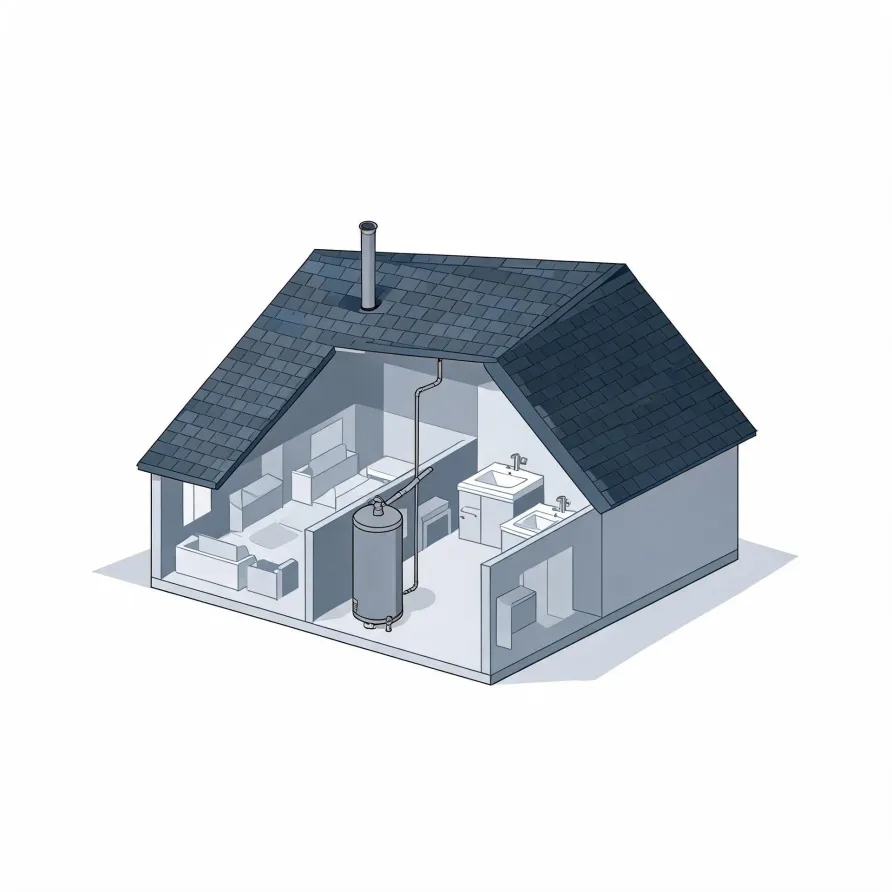
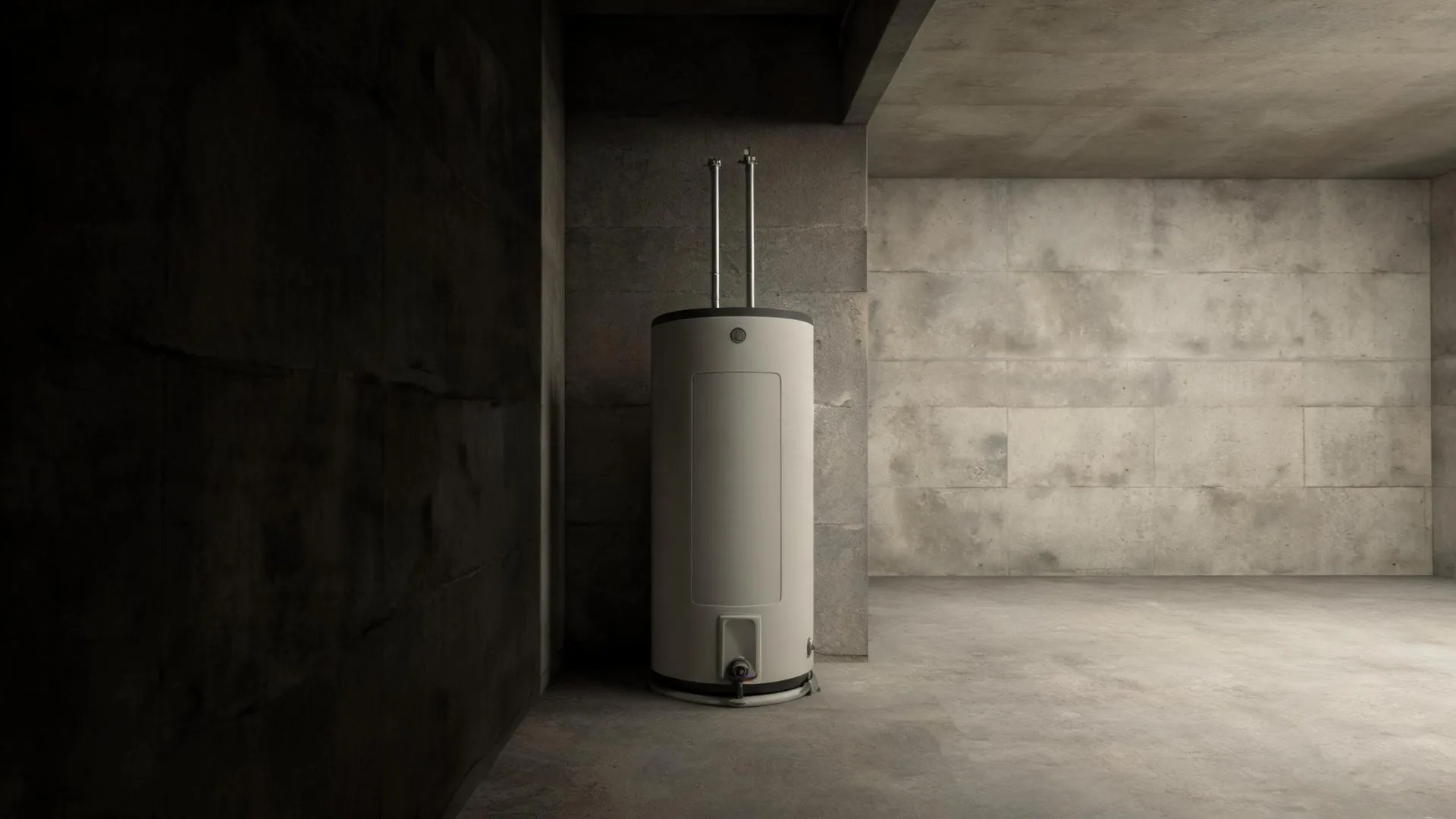
The tank is the piece a homeowner notices first, usually standing in a utility closet, basement, or garage. It holds and heats the water the house draws on. When sediment builds inside it or the lining degrades, the tank itself is what a contractor examines. The heating element or burner assembly sits inside or beneath the tank and is a common source of failure when hot water runs out too fast or stops coming altogether.
The pressure relief valve mounts on the side of the tank and opens if internal pressure climbs too high. The anode rod runs down through the top of the tank and slows corrosion from the inside. The thermostat, which controls the target temperature, and the dip tube, which directs cold water to the bottom of the tank, are both checked when the water temperature is off or mixing feels wrong at the tap.
The drawing shows the general layout of a water heater, and a licensed contractor determines which parts apply to the specific unit in your home.
Find a contractor in Halifax CountyHalifax County, by the numbers
107 severe weather events were recorded in Halifax County, North Carolina between 2015 and 2024.
NOAA National Centers for Environmental Information, Storm Events Database, bulk CSV export, events 2015-01-01 through 2024-12-31.Half the homes in Halifax County, North Carolina were built in 1979 or earlier (2020-2024 ACS 5-year).
U.S. Census Bureau, 2020-2024 American Community Survey 5-Year EstimatesHalifax County, North Carolina holds 24,872 housing units (2020-2024 ACS 5-year).
U.S. Census Bureau, 2020-2024 American Community Survey 5-Year EstimatesOwners occupy 62.9% of the occupied homes in Halifax County, North Carolina (2020-2024 ACS 5-year).
U.S. Census Bureau, 2020-2024 American Community Survey 5-Year EstimatesSevere Weather Events in Halifax County
Weather puts real load on water heaters, pushing them harder during cold snaps and recovery periods after outages. How often that pressure hits depends on what Halifax County actually sees, which is why local event history belongs on a page about repair work here.
107 severe weather events, 2015–2024. Source: NOAA National Centers for Environmental Information, Storm Events Database.