Tell us about the job
Takes about a minute. No obligation.
A contractor quoting a water heater installation in Pitt County is not working from a catalog. 102 severe weather events were recorded in Pitt County, North Carolina between 2015 and 2024. At that rate, severe weather is part of the normal working life of any unit installed here, and it shapes what a contractor specifies before the job starts. Sizing, mounting, and connection choices that hold up under ordinary conditions may not hold up under this county's regular load. A contractor who understands that record installs accordingly.
The wiring in a house tells a contractor more about the water heater job than the water heater does. Half the homes in Pitt County, North Carolina were built in 1994 or earlier (2020-2024 ACS 5-year). Electrical service installed for the standards of that era was sized for different loads, and a modern electric water heater can draw more than that service was designed to handle. When the panel is undersized, the equipment choice has to wait. A contractor quotes the electrical work first, then fits the unit around what the house can safely carry.
What a Water Heater Installation Covers
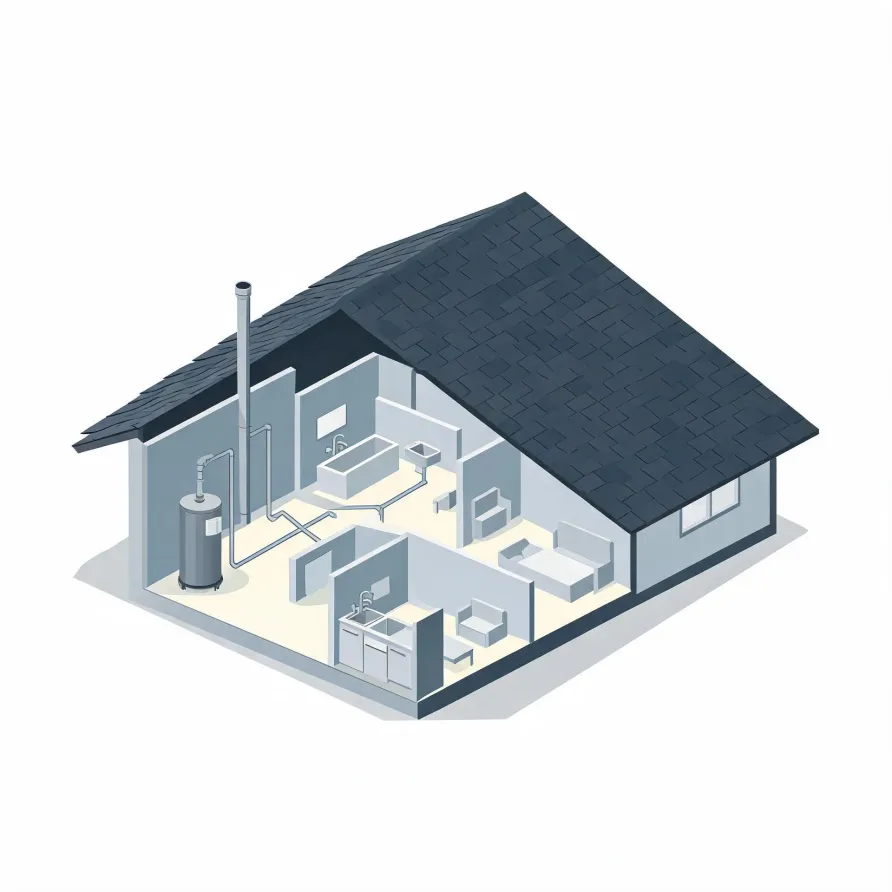
The tank or tankless unit is the center of the system. A storage-tank water heater sits in a utility closet, basement, or garage and holds a reservoir of heated water ready for use. A tankless unit mounts to a wall and heats water only as it flows through.
Connected to the unit are the cold-water supply line, the hot-water outlet line, and the pressure-relief valve, which sits on the side or top of the unit and releases pressure if it builds too high. A gas-fired unit also has a flue pipe running to an exterior vent, while an electric unit ties into a dedicated circuit at the breaker panel.
The drawing shows the general layout of these components, and a licensed contractor determines exactly what applies to this house.
Find a contractor in Pitt CountyPitt County, by the numbers
102 severe weather events were recorded in Pitt County, North Carolina between 2015 and 2024.
NOAA National Centers for Environmental Information, Storm Events Database, bulk CSV export, events 2015-01-01 through 2024-12-31.Half the homes in Pitt County, North Carolina were built in 1994 or earlier (2020-2024 ACS 5-year).
U.S. Census Bureau, 2020-2024 American Community Survey 5-Year EstimatesPitt County, North Carolina holds 82,638 housing units (2020-2024 ACS 5-year).
U.S. Census Bureau, 2020-2024 American Community Survey 5-Year EstimatesOwners occupy 51.4% of the occupied homes in Pitt County, North Carolina (2020-2024 ACS 5-year).
U.S. Census Bureau, 2020-2024 American Community Survey 5-Year EstimatesSevere Weather Events in Pitt County
Water heaters work harder when the conditions outside are harder. Local weather history shapes how much strain a unit takes on over its life, which makes it a real factor in sizing and installation decisions for Pitt County homes.
102 severe weather events, 2015–2024. Source: NOAA National Centers for Environmental Information, Storm Events Database.