
What North Carolina homes are up against.
NOAA National Centers for Environmental Information, Storm Events Database, bulk CSV export, events 2015-01-01 through 2024-12-31. · U.S. Census Bureau, 2020-2024 American Community Survey 5-Year Estimates

What a contractor has to settle before quoting a job in this state is how hard the equipment will actually be pushed over its working life, not just what it is rated to do on a calm day. 10,154 severe weather events were recorded in North Carolina between 2015 and 2024. At that pace, a system that holds its output under load year after year is worth more to a homeowner than one that looks strong on paper but degrades faster under repeated demand. That gap between rated performance and real-world endurance is where a county-level assessment does work a statewide number cannot, because local conditions shape how often a given system is asked to run at its limit.

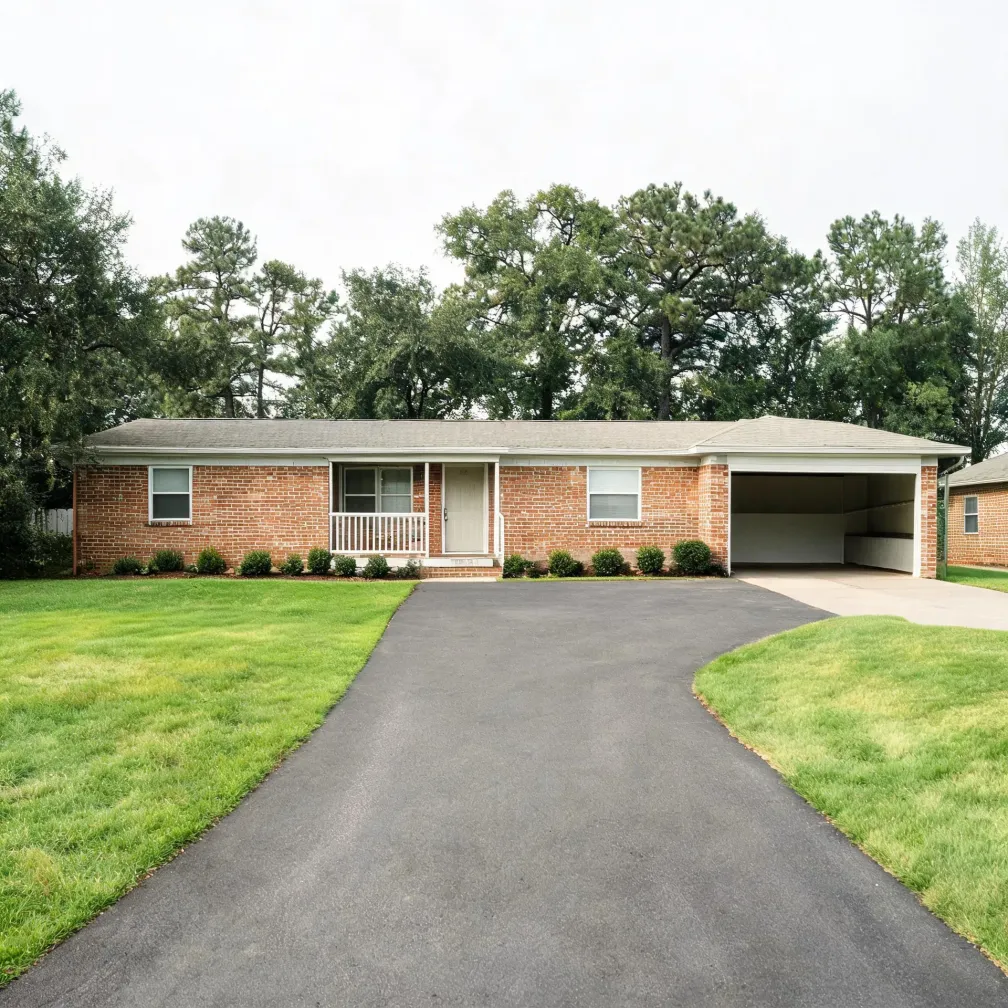
Before a contractor can spec a replacement system, they have to look at what is already in the house. Ductwork sized for an older unit, electrical service that predates current load requirements, flue configurations that were built around a different fuel type: all of it has to be assessed on-site, because none of it can be assumed to match what a new system needs. Half the homes in North Carolina were built in 1991 or earlier (2020-2024 ACS 5-year). That puts the inspection ahead of the recommendation for a large share of the homes across the state, not just in older neighborhoods. What a contractor finds when they open the system determines the specification, and sometimes the scope of work that comes with it.
How hard does North Carolina weather actually work your HVAC?
2015–2024 · Source: NOAA National Centers for Environmental Information, Storm Events Database.
A condenser sitting outside in North Carolina faces ice, wind, hail, and flooding across its service life, and the equipment has to be sized and positioned to handle all of it, not just average days. A unit that is undersized, poorly sited, or poorly sealed pays for that mismatch in shortened service and higher repair bills. The licensed contractor you are matched with knows what local conditions demand and specs the job accordingly.
North Carolina HVAC Installation and Repair License Requirements
North Carolina sets its own rules for who can perform HVAC installation and repair work, and those rules are quoted directly here rather than paraphrased.
North Carolina issues Class I heating licenses covering all systems in all structures, and Class II licenses covering heating systems in single-family detached residential dwellings.
A state license requirement of this kind means the work on your home can only be performed by a contractor who holds the credential the state has issued for this trade. That boundary is not advisory. The contractors this site routes requests to hold the license these provisions describe, and that is the filter your request passes through before it reaches anyone.
See the Source Provisions2 provisions
North Carolina issues Class I heating licenses covering all systems in all structures, and Class II licenses covering heating systems in single-family detached residential dwellings.
North Carolina requires a license before any person or firm may engage in, or offer to engage in, the business of heating contracting.